
 return
Yintai Charity | Recruitment for the 2019 'Blue Pioneer' Project Launched
The ocean is a magnificent deep blue and also the cradle of life. Have you ever sat on the beach and dozed off, enjoying a moment of comfort? Have you ever climbed onto a lighthouse to gaze and wait for an expectation in your heart; Have you ever entered the world of the ocean and felt the peaceful tolerance and peace?
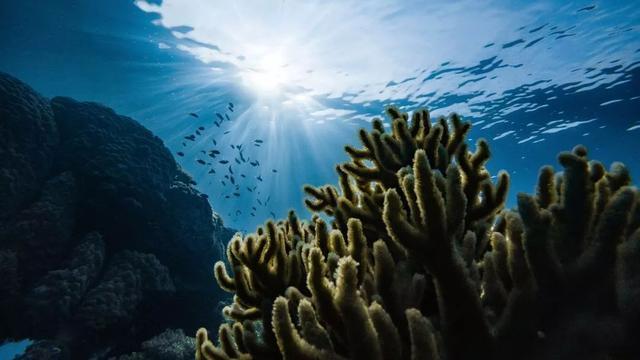
What has the ocean done for humanity?
1. Provide food sources
The ocean provides over 100 million tons of seafood products to humans every year; The global fishing output is about 90 million tons, of which about 90% of the products come from the ocean; The world's aquaculture production exceeds 70 million tons, of which about 30% comes from the ocean.
2. Regulating temperature and rainfall
According to relevant research estimates, the ocean can absorb about 93% of the heat energy generated by human greenhouse effect, effectively slowing down the excessive rise of surface temperature and water transfer caused by heat exchange, and also bringing abundant precipitation to all parts of the world.
3. Oxygen production
It is estimated that marine algae produce 36 billion tons of oxygen annually through photosynthesis, accounting for approximately 70% of global oxygen production.
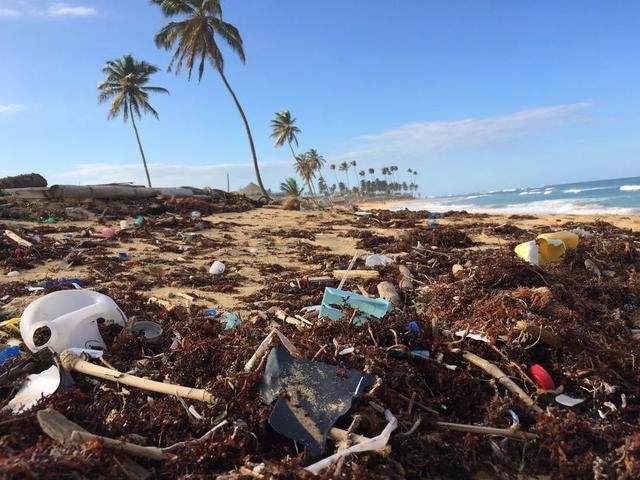
But have you also seen that in recent years, with the increasing impact of human activities, ocean problems have become more severe. Plastic pollution, overfishing, coral bleaching, rising sea levels...
What have humans done to the ocean?
1. Pollution
For many years, many countries have regarded the ocean as a good place for garbage disposal. According to incomplete estimates, at least 240 million tons of garbage have entered the ocean. Meanwhile, accidents such as oil spills at sea also cause significant pollution to the ocean, affecting the marine ecological environment.
2. Overfishing
According to estimates from relevant institutions, 90% of global fish resources are facing problems of overfishing or overfishing. If action is not taken immediately, global fishery resources will be depleted within 50 years.
3. The impacts of climate change
Climate change is accelerating ocean acidification and the destruction of marine ecological structures.
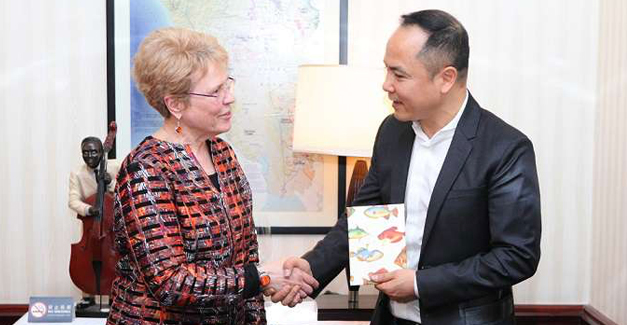
2016 On March 21, 2021, Mr. Shen Guojun, Chairman of Yintai Group, Founder of Yintai Public Welfare Foundation, and Director of Taohuayuan Ecological Protection Foundation, welcomed Ms. Jane Lubchenco, former Director of the National Oceanic and Atmospheric Administration (NOAA) of the United States, on behalf of Yintai Public Welfare Foundation and Taohuayuan Ecological Protection Foundation. Mr. Shen Guojun and Ms. Lopchenko had a detailed discussion on the "Blue Pioneer" program aimed at cultivating professionals in marine protection. The program is jointly initiated by the Pakte Foundation, Taohuayuan Ecological Protection Foundation, and Yintai Public Welfare Foundation, and aims to cultivate and support young public welfare talents in China who are enthusiastic about marine protection.
In 2016, "Blue Pioneer" recruited 15 outstanding students from the Guanghua School of Management at Peking University, including master's and MBA students in social welfare management, young forces in China's marine protection field, and students majoring in marine science, and officially launched the first phase of the project.
In 2018, the "Blue Pioneer" program was jointly organized by the Taohuayuan Ecological Protection Foundation and the Environmental Research Center of Duke Kunshan University, and invited many well-known environmental protection organizations at home and abroad to participate in the implementation. This plan has received support from numerous domestic and foreign marine conservation research institutions and public welfare organizations. Nearly 26 environmental experts went to Duke Kunshan to train and guide this group of young marine talents. In 2018, the "Blue Pioneer" program also organized students to exchange ideas with domestic public welfare organizations and social enterprises, and carried out practical projects in Taiyang Bay, Sanya, Hainan and Dalinghekou, Liaoning. In 2018, the Peach Blossom Spring Foundation also provided seed funding support to five students to participate in three projects: "Ocean Citizen Science", "Seafood Insight", and "Public Communication Research on Sustainable Sea Consumption".
In 2018, the "Blue Pioneer" program gained social recognition. Among them, student Wang Miao was awarded the title of "United Nations Youth Environmental Defender", and students Cao Man, He Li, and others were invited to have a dialogue with the Norwegian King and Queen and the director of the Peach Blossom Spring Foundation, Jack Ma.

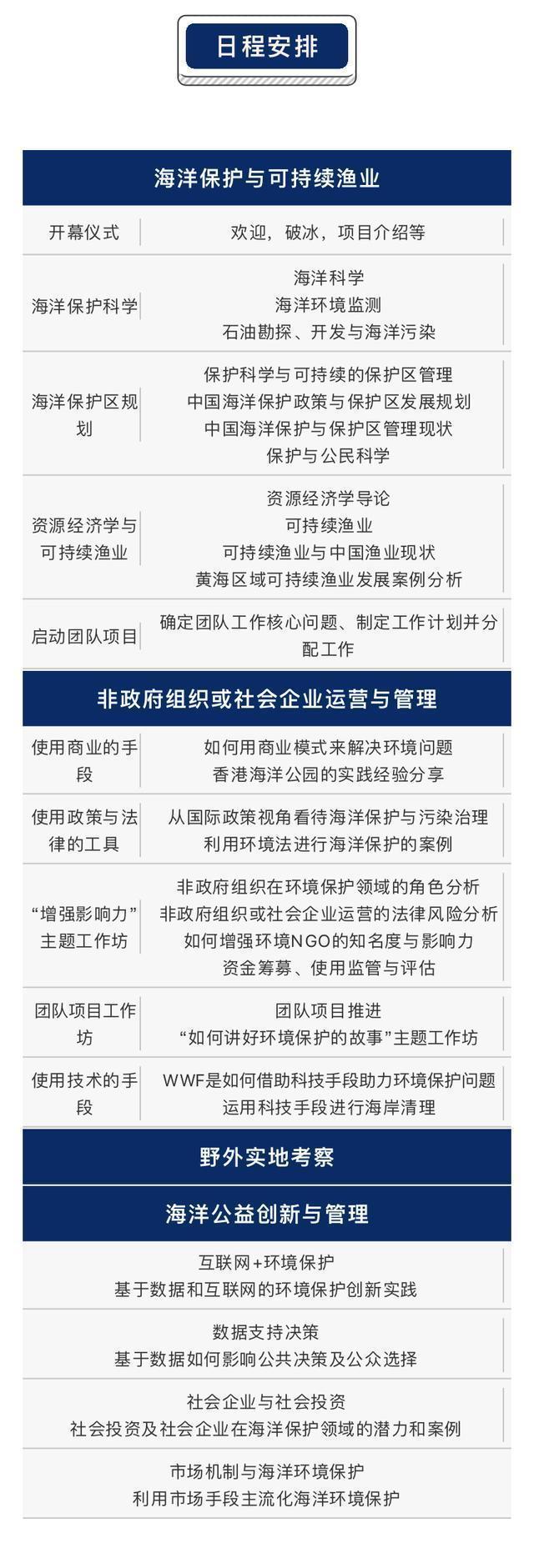
2019 In the coming year, the "Blue Pioneer" program will still be divided into three thematic sections:Marine Conservation Science,Social Enterprise and Non Governmental Organization Operations, andInnovative Public Welfare Model Sharing. This issue of the 'Blue Pioneer' program will focus on the planning of marine protected areas, analyzing the planning, construction, and management strategies of protected areas and the win-win relationship between coastal areas and related communities. At the same time, we will delve into the topic of sustainable fisheries and supply chain management, from the theoretical basis of resource and environmental economics to the policies and practices of countries around the world in this area; How different departments, from government to enterprises, can achieve good supply chain management from their own perspectives. In addition, the 2019 "Blue Pioneer" plan will analyze and discuss innovative models for public welfare in 2019, taking into account current policies, laws, markets, and other factors.
In addition to the series of training courses, "Blue Pioneer" students in this session will have the opportunity to participate in field research in Hong Kong, Shenzhen, and other places.; Excellent students will also receive seed funding and the opportunity to attend accelerator training in Silicon Valley, USA.
2019 The annual 'Blue Pioneer' program is expected to enroll 20 students. Professionals who are passionate and interested in marine protection, have more than two years of work experience in public welfare organizations (including social organizations and social enterprises), heads of social responsibility departments of enterprises, and media personnel related to marine protection are all eligible to apply.
Registration link: http://bluepioneerprogram.mikecrm.com/Msf7l2t
Project cost:
The cost of the "Blue Pioneer" training project will be borne by the organizer, and the selected candidates will be responsible for their own transportation expenses during the course period.
Important Date:
Registration Open: July 15th July 31st
Review Interview: August 5th August 9th
Project Launch: August 27th
First Training: August 28th September 1st
: justify; ">Second training: October 24th to October 27th
Third Ocean Public Welfare Forum: October 28th to October 31st
Third training: December 5th to December 6th
Accelerated Training in the United States: Summer 2020
* This schedule is a preliminary plan, and the organizer reserves the right to make adjustments based on actual circumstances